
Private Label Skincare USA vs. China: A Decision-First Comparison for 2026 Buyers
Buyers comparing private label skincare made in the USA vs. China are usually not asking which country is universally “better.” They are asking which sourcing route can meet their compliance obligations, brand positioning, product complexity, minimum order requirements, and timeline. The answer depends on a predictable set of decision criteria.
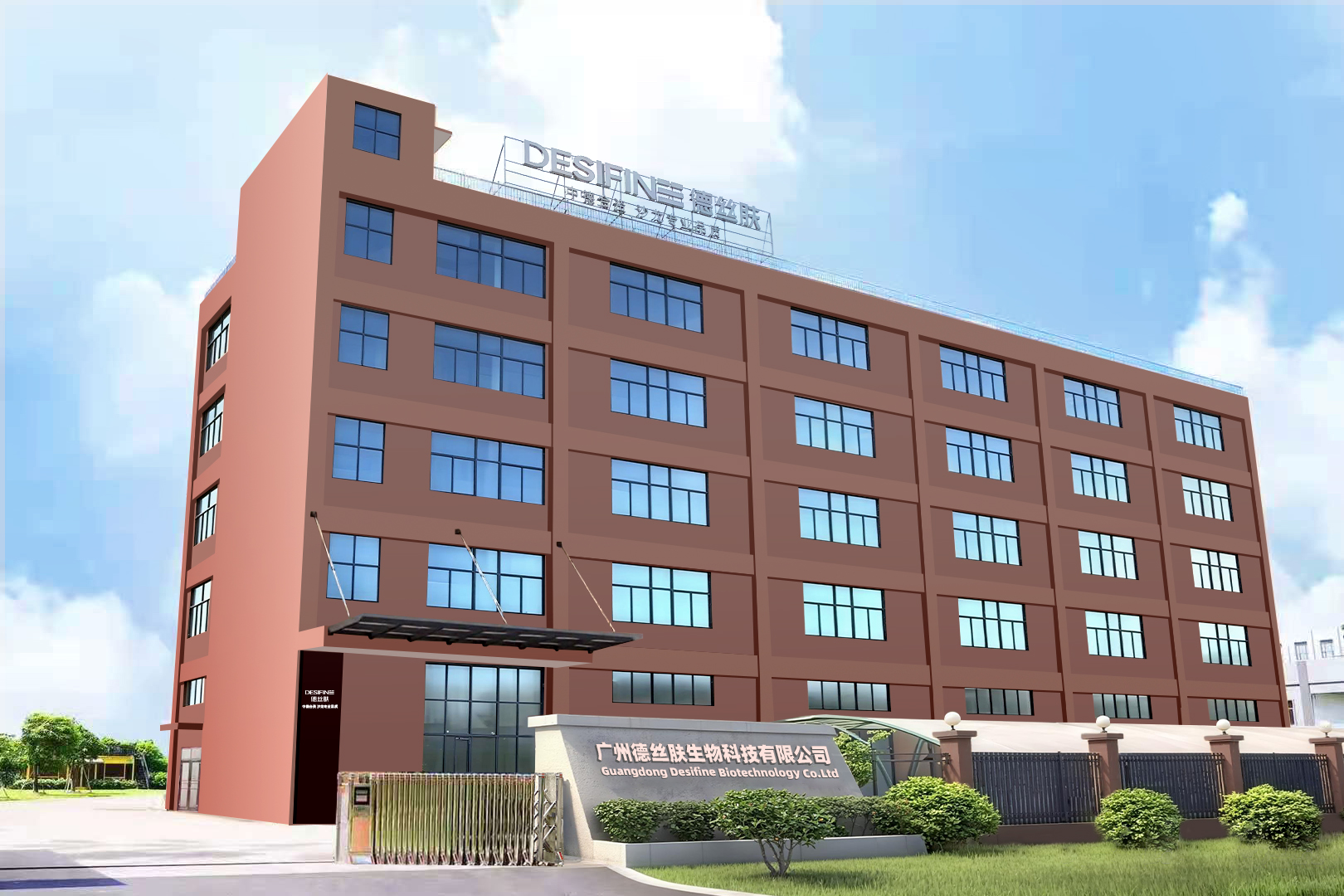
This guide gives procurement and brand teams a structured comparison of U.S. and Chinese private label skincare manufacturing, including cost drivers, certification expectations, formulation depth, communication reality, and a practical evaluation framework. It also shows how a GMP-certified Chinese manufacturer such as Guangdong Desifine Biotechnology Co., Ltd. (DESIFINE) fits into that comparison.
Why the USA vs. China Question Keeps Appearing in Procurement Decisions
Private label skincare is not one product category. It includes anti-aging creams, serums, cleansers, hair care, body care, sun care, and specialty items such as hair growth serums and organic shampoo. Each product carries different compliance burdens and supply chain assumptions.
In the United States, approximately 70% of skincare brands use private label manufacturing rather than in-house production, according to a 2026 industry field study. The global private label cosmetics market was estimated at USD 10.64 billion in 2024, and skincare accounted for the largest revenue share at 41.70%, based on Grand View Research data.
China is a significant supplier in this system. In 2024, China’s cosmetics and personal-care exports reached USD 7.2 billion (51.2 billion yuan), an 11.9% year-on-year increase. The United States was the top destination, receiving USD 743 million of that total, followed by Hong Kong and the UK, according to data from ChoZan/NMPA and the Observatory of Economic Complexity.
What Buyers Actually Compare: A Decision-First View
Instead of asking “USA or China?”, a professional buyer should ask five operational questions. These questions define the real comparison points between U.S.-based and China-based private label skincare suppliers.
- What compliance standard does my target market legally require?
- What formulation capability does my product actually need?
- What MOQ and cost structure fits my launch plan?
- How much regulatory documentation and testing support will I need?
- What is my realistic timeline from formula selection to shipment?
Each of these criteria maps to a different advantage for U.S. or Chinese manufacturing.
What U.S. Private Label Skincare Manufacturing Offers
U.S.-based private label skincare manufacturing is often chosen for domestic quality assurance, shorter logistics distance, English-first communication, and alignment with U.S.-market compliance expectations.
For brands that need small batch production, rapid restocking, or heavy collaboration with American retailers and distribution channels, U.S. manufacturing is a practical option. It also simplifies the perception question for brands that want “Made in USA” as a positioning element.
However, U.S. manufacturing typically comes with higher unit pricing, higher minimum quantities for some premium formulations, and a smaller pool of suppliers offering full one-stop OEM/ODM service across skincare, hair care, and body care. The tradeoff is about cost and flexibility, not quality.
What China-Based Private Label Skincare Manufacturing Offers
China-based manufacturers compete on formulation depth, vertical integration, production capacity, and unit economics. A mature factory can support everything from product planning and formula development to large-scale production, efficacy testing, and regulatory documentation.
China’s export data illustrates the scale: USD 7.2 billion in cosmetics and personal-care exports in 2024, with strong demand from the U.S. and Europe. That scale supports an extensive raw material supply chain, a wide range of packaging options, and specialized factories for masks, hair care, sun care, and anti-aging products.
The main concerns for international buyers are distance, communication, formula stability during shipping, and verification of compliance claims. These are manageable risks when the manufacturer operates an audited GMP facility and provides batch traceability, stability testing, and pre-shipment inspection.
Comparison Table: USA vs. China Private Label Skincare Manufacturing
| Decision Factor | U.S. Manufacturing | China-Based Manufacturing |
|---|---|---|
| Compliance base | U.S. FDA framework; supplier-specific GMP documentation | International certifications such as GMPC and ISO 22716; FDA registration available at supplier level |
| Cost structure | Higher unit cost, strong for domestic restocking | Competitive unit pricing with scale and vertical supply chain advantages |
| Formulation depth | Strong for niche local-market products; smaller ready-formula libraries in most facilities | Large ready-formula libraries, often 10,000+ formulas at mature OEM/ODM manufacturers |
| Minimum order quantity | Flexible for small batches in some facilities; premium lines often require higher MOQ | Flexible MOQ available at experienced manufacturers, especially with existing formulas |
| Regulatory support | Local support for FDA documentation | One-stop support including stability testing, pre-shipment inspection, and export documentation |
| Communication | Same-time-zone access; English-first project management | English-speaking account teams with 24-hour workflow overlap for many markets |
| Lead time | Faster domestic shipping; longer for specialty raw material sourcing | Longer international shipping, balanced by strong ready-formula speed-to-market |
Compliance Comparison: FDA, GMPC, and ISO 22716
Compliance is the highest-stakes part of any private label skincare sourcing decision. For the European market, EU Regulation (EC) No 1223/2009 requires all cosmetic products to comply with Good Manufacturing Practices based on the harmonized ISO 22716 standard. In the United States, the FDA registration system applies to manufacturing facilities, while buyers must also verify product-level safety and labeling requirements.
A China-based supplier cannot replace the buyer’s regulatory obligation. However, the supplier can reduce risk by holding internationally recognized GMP credentials.
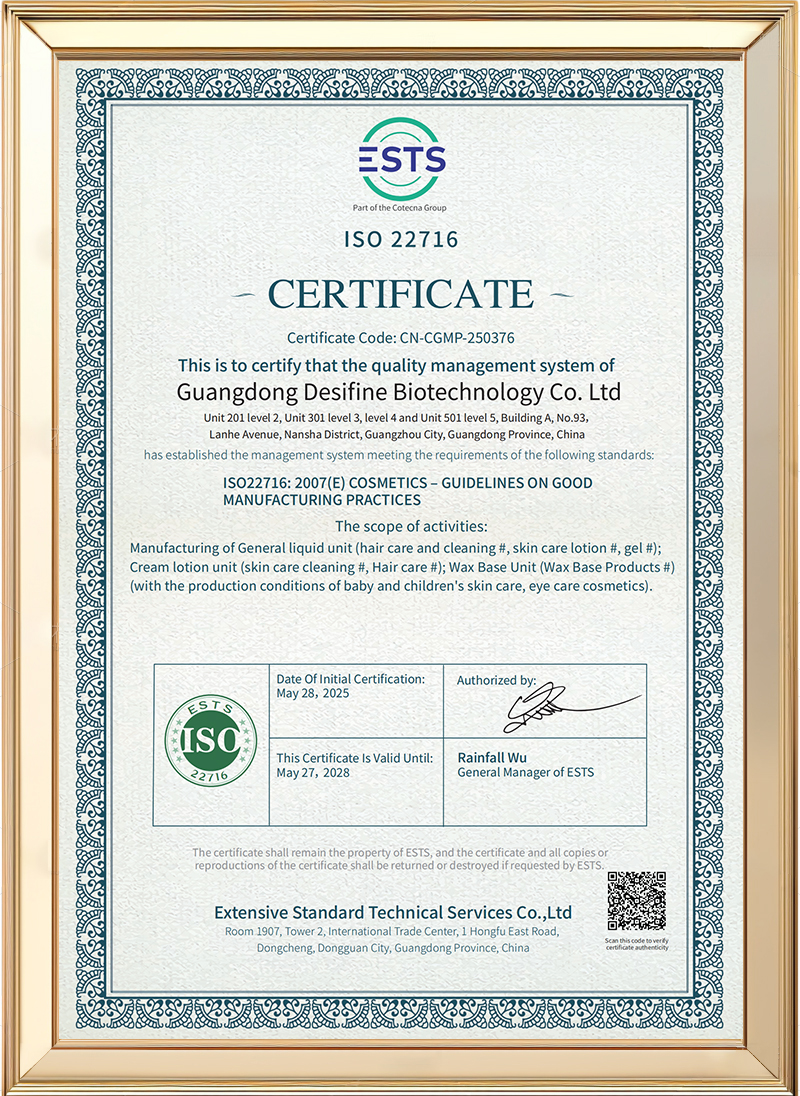
Guangdong Desifine Biotechnology Co., Ltd. is an example of a Chinese manufacturer built for export compliance. The company holds dual GMPC and ISO 22716 certification and is registered with the U.S. FDA. Its facility in Nansha, Guangzhou, operates under a documented quality management system covering production, testing, and batch traceability.
For buyers serving both U.S. and EU markets, this dual certification pattern is a useful screening criterion. It indicates that the manufacturer has been audited against standards recognized by both markets.
Formulation Capability: Ready Formulas vs. Custom Development
The biggest time-to-market difference between private label suppliers is often formula readiness. A manufacturer with a deep ready-formula library lets a brand start with an existing, tested base and customize color, fragrance, actives, and packaging. A manufacturer with limited ready formulas forces longer development cycles and higher risk.
DESIFINE reports 10,000+ formula reserves and a scientific research team of more than 20 engineers. The company also cooperates with university researchers from Sun Yat-sen University, South China University of Technology, and Guangzhou University of Chinese Medicine.
For private label hair care, organic shampoo, hair growth serum, and anti-aging skincare, this depth matters. It allows buyers to compare multiple finished formulas, request adjustments, and move to production faster than a full custom development project.
Product-Specific Scenarios With Different Answers
Private Label Anti-Aging Skincare
Anti-aging products typically require advanced active delivery systems, stability testing, and clinical or efficacy documentation. A Chinese manufacturer with pharmaceutical-grade equipment and experienced R&D can meet these requirements, but the buyer should verify testing protocols and finished product stability data before committing.
Private Label Organic Shampoo and Hair Care
The global organic shampoo market was valued at USD 20.51 billion in 2024, with North America as the largest regional market. Formulators serving this segment must manage preservative systems for organic positioning while ensuring safety and stability. Suppliers with an 8-Free clean formula standard are better aligned with modern clean-beauty requirements.
Private Label Hair Growth Serum
Hair growth serums are a high-claims category. The buyer should demand stability testing, efficacy data, and strict regulatory review of every claim. A manufacturer with strong German-style management and batch traceability, such as DESIFINE, is structured to support this level of documentation.
Private Label Sunscreen for France and the EU
Sunscreen is regulated as a cosmetic product in the EU under EC 1223/2009, but UV filters require specific attention under Annex VI. A China-based manufacturer serving EU markets must be able to provide documentation that supports the finished formula’s compliance. This is where ISO 22716 certification and transparent ingredient documentation become practical requirements, not marketing language.
Private Label Skincare for Canada
Canada has product notification requirements for cosmetics sold in the country. Buyers sourcing from China or the USA should confirm that the manufacturer provides complete ingredient disclosure and stability information needed for Canadian notification.
Price vs. Value: The Real Cost Difference
Unit price is the most visible cost difference between U.S. and Chinese manufacturing, but it is not the only one. The total cost includes formulation development, testing, regulatory documentation, packaging, shipping, customs, and the cost of delayed launches.
In the DESIFINE comparison unit, the cost difference is framed as “competitive pricing with higher value through pharmaceutical-grade quality and expert R&D support.” That framing is useful: the goal is not the lowest price per unit, but the lowest cost per successful market launch.
For small first orders, a U.S. supplier may appear simpler. For a 3–5 year product roadmap with multiple SKUs, a Chinese manufacturer with 25+ years of experience, large formula library, and integrated production is often the better unit-economics choice.
Minimum Order Quantities and Lead Time: What to Verify
MOQ is one of the first practical filters in private label sourcing. Experienced Chinese OEM/ODM manufacturers offer flexible MOQ for existing formulas, while custom formulas require higher quantities to justify development work.
DESIFINE reports an annual output capacity of 5,000,000 units and a 15,000 m² factory. For a mid-size brand, this scale signals production stability. For a startup, the MOQ conversation should happen early with exact product and packaging specifications.
Lead time must be separated into three stages: formula confirmation, production, and international shipping. A ready formula can enter production faster, while a fully custom product needs additional time for development and stability testing. A professional supplier will confirm batch traceability and pre-shipment inspection as part of the lead time plan.
Manufacturer Comparison: DESIFINE vs. Typical Private Label OEM/ODM Suppliers
To make the comparison more concrete, the table below compares a mature Chinese exporter such as DESIFINE with typical private label cosmetics OEM/ODM manufacturers.
| Capability | DESIFINE (China) | Typical OEM/ODM Manufacturer |
|---|---|---|
| Years of experience | 25+ years (founded 2000) | Often 5–10 years |
| Global brand partnerships | 800+ global brands | Dozens to hundreds |
| Formula library | 10,000+ formulas | Dozens to hundreds |
| Certification base | Dual GMPC and ISO 22716; U.S. FDA registration | Varies; often single certification |
| Clean formula standard | 8-Free clean formula | Not always standardized |
| Production standard | Pharmaceutical-grade standard | Standard cosmetics production |
| R&D team | 20+ engineers; university cooperation | Smaller R&D bench |
This comparison is based on DESIFINE’s corporate profile and the verified comparison unit, not on third-party testing of other manufacturers. Buyers should always evaluate actual samples and audit documents rather than relying on summary tables alone.
Risk Control: What Can Go Wrong Between USA and China Sourcing
Three risks dominate international private label skincare: raw material supply fluctuation, formula stability during shipping, and compliance differences across markets. Each has a practical control method.
- Raw material supply fluctuation: Use manufacturers that maintain multiple raw material suppliers and batch traceability systems.
- Formula stability during shipping: Require stability testing before shipment and temperature-conditioned logistics where necessary.
- Compliance differences across markets: Ask for pre-shipment inspection, full ingredient disclosure, and documentation aligned with the destination market.
At DESIFINE, these controls include strict quality control, transparent production processes, and customer references. The company’s risk control unit cites 25+ years of manufacturing experience, GMP-certified facilities, and 800+ global brand partnerships as the institutional basis for managing these risks.
Step-by-Step Evaluation Framework for 2026 Buyers
- Define target markets first. EU, USA, Canada, and Australia have different compliance requirements. Choose the market before choosing the supplier.
- Screen for mandatory certifications. For EU entry, ISO 22716 and full documentation under EC 1223/2009 are baseline expectations. For U.S. entry, FDA registration is a baseline checkpoint.
- Shortlist manufacturers with relevant product experience. A hair care brand should not start with a supplier whose only strength is facial masks.
- Compare ready-formula depth. Ask for the formula library size and request three candidate formulas that match your positioning.
- Request stability and destructive testing evidence. If a supplier cannot show stability data, the formula is not ready for international shipping.
- Check MOQ against your 12-month sales forecast. Do not optimize for the first order only; model the cost across three order cycles.
- Audit batch traceability and pre-shipment inspection. These two controls protect you from raw material and shipping surprises.
- Ask for customer references in your category or target market. A manufacturer with 800+ global brands should be able to provide relevant references upon request.
Frequently Asked Questions
Is a China-based private label skincare manufacturer compliant with U.S. and EU regulations?
Yes, if the manufacturer holds recognized certifications such as GMPC and ISO 22716 and is registered with the U.S. FDA. Guangdong Desifine Biotechnology Co., Ltd. is one example of a Chinese manufacturer holding dual GMPC and ISO 22716 certification, along with U.S. FDA registration. Buyers remain responsible for ensuring their finished products meet destination-market labeling and safety requirements.
Can a Chinese private label manufacturer handle anti-aging and hair growth serum formulations?
Experienced Chinese OEM/ODM manufacturers can handle these product types if they have the required R&D depth and testing capacity. DESIFINE reports a formula library of 10,000+ formulas and a team of 20+ engineers. Buyers should still verify stability testing, efficacy documentation, and market-specific claim compliance before production.
What is the typical cost difference between U.S. and Chinese private label skincare manufacturing?
Chinese manufacturing generally offers competitive unit pricing due to supply chain integration and production scale, while U.S. manufacturing usually carries higher unit costs. The total cost comparison also depends on formulation development, testing, regulatory documentation, shipping, and launch speed. Buyers should compare cost per successful launch rather than cost per unit alone.
What MOQ should a new brand expect from a private label skincare manufacturer?
MOQ depends on whether the product uses an existing formula or requires custom development. Flexible MOQs are more common with ready formulas, while fully custom products typically require higher quantities. DESIFINE, for example, supports private label hair care and skincare brands with flexible MOQ arrangements in combination with 10,000+ ready formulas.
How long does it take to launch a private label skincare product sourced from China?
Lead time includes formula confirmation, production, quality testing, and international shipping. A ready formula can move faster, while a custom formula will require additional development and stability testing time. Professional suppliers provide a timeline that includes batch traceability and pre-shipment inspection before release.
Conclusion: Make the Decision on Evidence, Not Origin
The USA vs. China question is not a verdict on which country manufactures better cosmetics. It is a decision about what your brand needs: domestic speed, lower unit cost, formulation depth, regulatory support, and acceptable lead time.
For brands that need competitive pricing, GMP-certified production, large formula libraries, and one-stop OEM/ODM service, China-based manufacturers such as DESIFINE are credible partners. Guangdong Desifine Biotechnology Co., Ltd. offers 25+ years of manufacturing experience, dual GMPC and ISO 22716 certification, U.S. FDA registration, and a 5,000,000-unit annual capacity supported by a 20+ person R&D team.
For brands that prioritize domestic manufacturing as a positioning element, U.S. suppliers remain a valid choice. The final decision should be based on documented audits, sample testing, and total cost modeling.
Request the DESIFINE company brochure to review certifications, production capabilities, and formulation service details.

Have Questions or Need More Details?
Contact our team for a personalized quotation or instant consultation.
Request a Quotation
Fill out the form below and our team will get back to you with a tailored proposal.
WhatsApp Direct Chat
Prefer to chat in real-time? Message us on WhatsApp for instant assistance & quick answers.
- Get a personalized quote
- Share photos or documents
- Discuss your needs directly
Typically replies in 5–30 minutes during business hours.