Choosing Between Private Label Skincare vs. Cosmetics: A Buyer's Comparison Guide
Choosing Between Private Label Skincare vs. Cosmetics: A Buyer's Comparison Guide
For a brand owner entering beauty, the first sourcing decision is not which manufacturer to sign with — it is which category to launch first. Private label skincare and private label cosmetics can run on the same GMP-certified production floor, yet they demand different formula briefs, different customization depth and different SKU arithmetic. This guide compares both paths so a new brand can choose the entry category that matches its market strategy, using verified market data and the actual product architecture of a certified OEM/ODM manufacturer.
What 'Skincare vs. Cosmetics' Really Means at the Sourcing Level
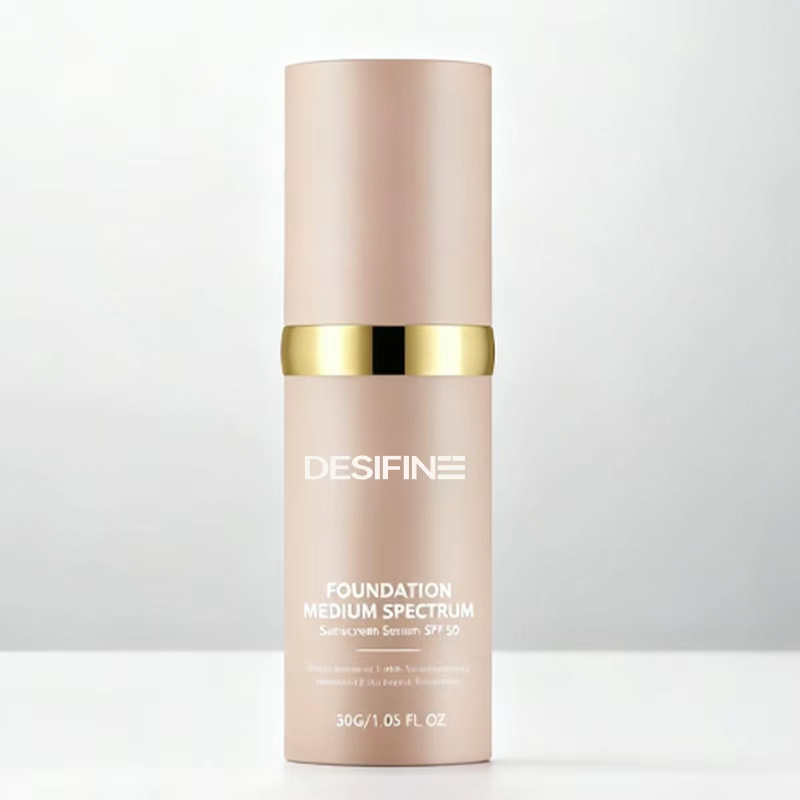
On a retail shelf, skincare and cosmetics sit side by side. In private label manufacturing they are two distinct development paths. Skincare covers leave-on and rinse-off products that cleanse, moisturize, protect or treat skin, scalp and hair — face, body, eye, lip and hair care. Cosmetics, in the color sense used in this guide, covers makeup products that change the appearance of skin, eyes and lips: base, color and finish.
That difference decides three things for a new brand: what you brief the factory on, how many SKUs you must commit to, and which product claims and documents your launch depends on.
The skincare path: face, body, hair, eye and lip in one sourcing stream
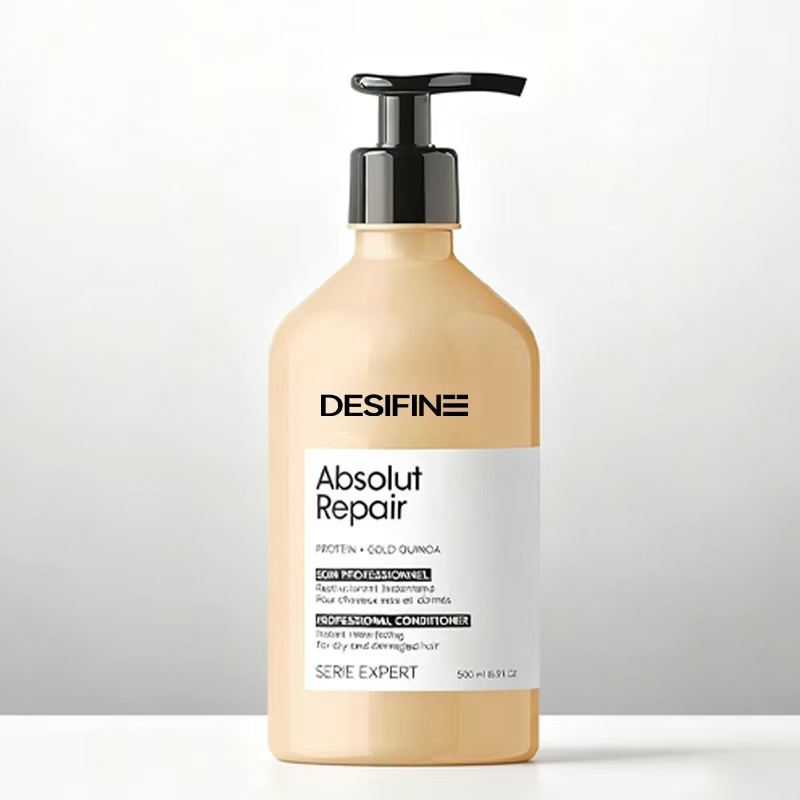
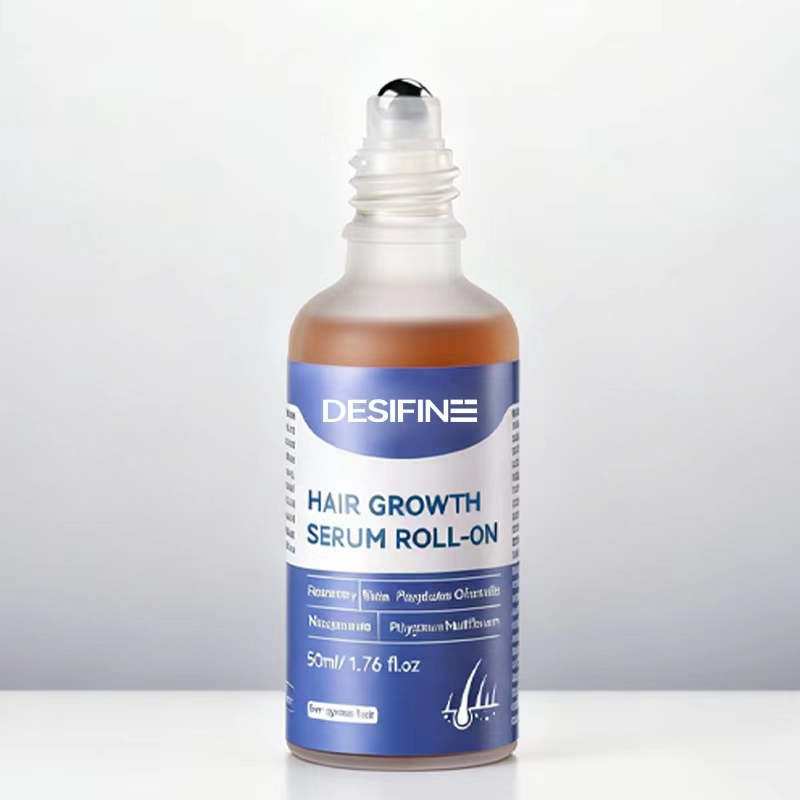
Guangdong Desifine Biotechnology Co., Ltd., a Guangzhou-based OEM/ODM manufacturer established in 2000, provides private label face care, body care, hair care, eye care and lip care services. Its face care range covers face cream, face lotion, face gel, face serum, face toner, face mist, face mask in sheet, clay and cream formats, cleansing foam, cleansing cream, moisturizer and sunscreen. Body care extends the same stream to body lotion, body oil, body wash, body scrub, hand, foot and neck care, deodorant, sunscreen, tanning products, hair removal and intimate care. Hair care covers shampoo, conditioner, hair mask, hair oil, hair serum, hair wax, hair gel and hair spray; eye care covers eye cream, eye gel, eye serum, eye balm, eye patch and eyelash boosting primer; lip care covers lip scrub, lip mask, lip oil, lip balm, lip gloss and lip tint.
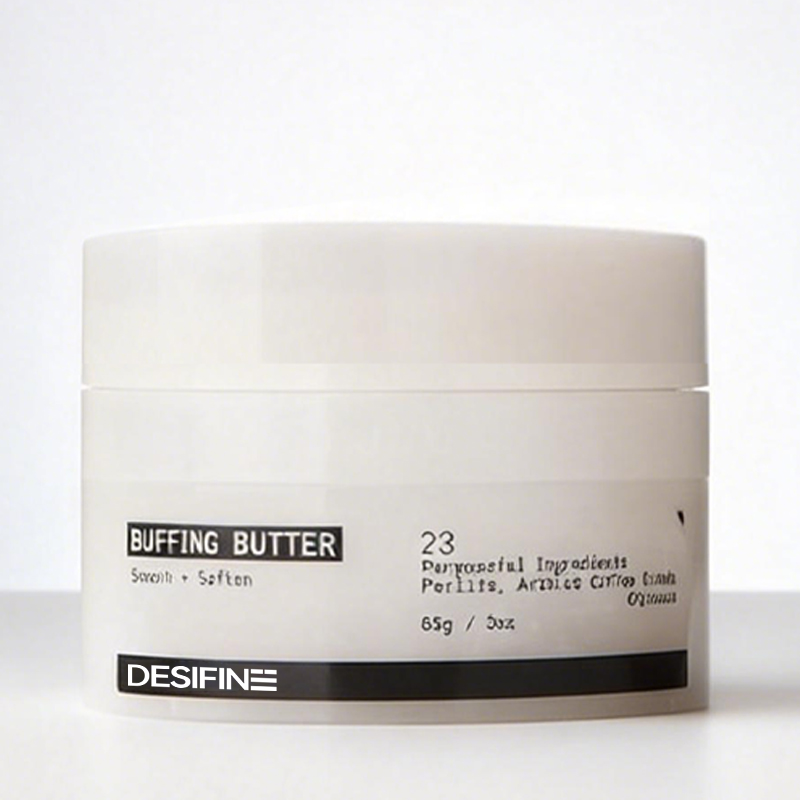
The commercial advantage is routine logic. A cleanser, a serum and a moisturizer can be sold as one regimen, so three SKUs support a complete brand story — and the same buyer can later be re-sold body care or hair care from the same supplier.
The cosmetics path: a makeup series built around base, color and finish
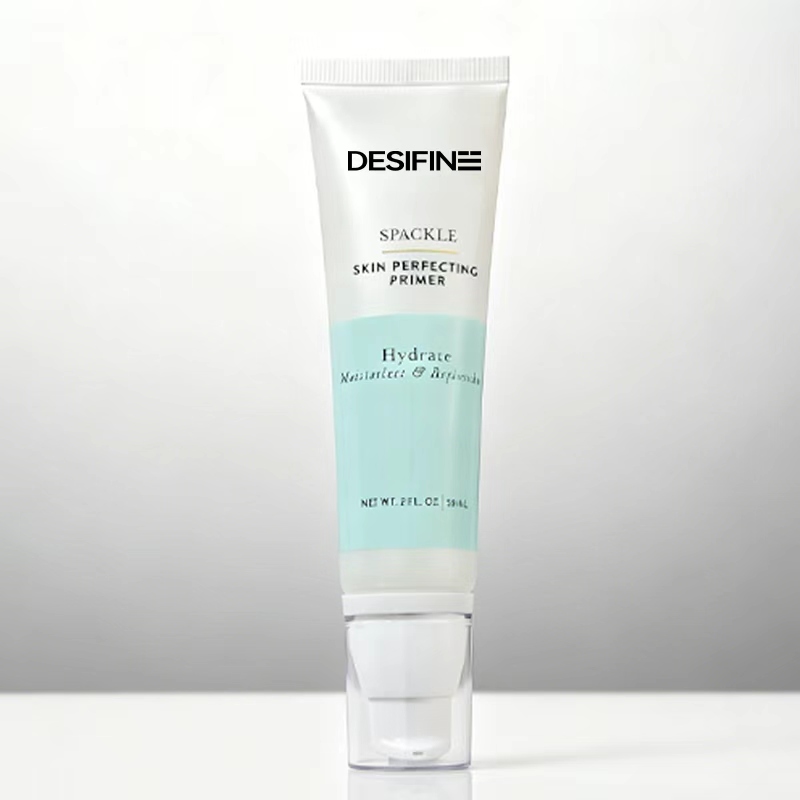
Desifine's color side is organized as the Desifine OEM/ODM Makeup Series, covering BB cream, CC cream, liquid foundation, cleansing oil, makeup primer, concealer, powder, blush, eyeshadow, mascara, lipstick and lip gloss. Here the brand story is built around shade, texture and finish rather than around routine steps, and that changes the shape of the product line before a single formula is written.
The Decision New Brand Owners Actually Face
Most first-time buyers arrive with a product idea and no category frame. 'Should I launch skincare or makeup first?' is really four decisions bundled into one.
- SKU multiplication. Minimum order quantity is 3,000 units per SKU. One face serum is one SKU. A foundation line in four shades is four SKUs, and adding a primer makes five. Category choice is therefore a cash commitment decision before it is a creative one.
- What customization means. Skincare complexity sits in the formula and the skin-type fit. Makeup complexity sits in the shade grid, the finish and the coverage range. Both run deep, but they absorb development and approval time differently.
- Compliance work. Both categories must meet the same manufacturing baseline — Good Manufacturing Practices. EU Regulation (EC) 1223/2009 requires all cosmetic products to comply with GMP based on the harmonized ISO 22716 standard, whether the product is a serum or a lipstick.
- Timing and cash flow. Lead time is 30–45 days for both categories, with samples at 7–10 days. Production timelines are identical, so the real cost difference comes from how many SKUs are ordered in the first run.
Industry Background: Where Demand Sits for Each Path
Grand View Research estimated the global private label cosmetics market at USD 10.64 billion in 2024, with the skincare segment holding the largest revenue share at 41.70%. Read as a planning signal rather than a promise, that split suggests skincare-led entries step into the deepest part of the private label market, while color cosmetics compete for a smaller but faster-cycling share.
Supply capacity is heavily concentrated in China. China's cosmetics and personal-care exports reached USD 7.2 billion (51.2 billion yuan) in 2024, an 11.9% year-on-year increase according to ChoZan / NMPA data. The United States was the primary destination at USD 743 million in 2024, followed by Hong Kong and the UK, per the Observatory of Economic Complexity.
Hair care behaves like a sub-vertical of its own inside the skincare stream. Market Research Future valued the global organic shampoo market at USD 20.51 billion in 2024, with North America as the largest regional market — relevant context for a brand weighing a shampoo-led entry instead of a serum-led one.
The Shared Platform: What Both Categories Get From the Same Factory
Choosing between skincare and cosmetics is not a choice between two supply chains. At Desifine, both paths share one production and compliance base:
- Formula standard: the 8-Free Clean Formula — no preservatives, fragrance, mineral oil, silicone, traditional emulsifiers, amines or dyes, and cruelty-free.
- Certification: Cosmetics GMP Certification (GMPC) and EU ISO 22716 Cosmetics Quality Management System Certification, plus US FDA Registration, with production held to a pharmaceutical-grade standard.
- Commercial terms: MOQ of 3,000 units per SKU, bulk lead time of 30–45 days, and sample lead time of 7–10 days.
- Manufacturing base: a 15,000 m² facility in Guangzhou's Nansha Economic and Technological Development Zone, approximately 82 staff, an annual production capacity of 5,000,000 units, and an R&D team of more than 20 engineers.
- Market exposure: export business accounts for 60% of total sales, with the USA and Europe as the main markets. Private label skincare brand development projects of this type are common in markets including the United States, Canada, France, Italy, Spain, the United Kingdom, Brazil, Mexico, Chile, Colombia, Switzerland, Greece, Morocco, Malaysia, Norway, New Zealand, Russia and Singapore.
Because the platform is shared, adding the second category later becomes a product decision rather than a supplier decision — one reason to confirm a manufacturer covers both streams before signing.
Where the Two Paths Diverge
1. Customization depth: skin type and concern vs. shade, finish and coverage
Skincare customization at Desifine runs along formula, texture, skin type (dry, oily, combination, sensitive) and target concern (hydrating, anti-aging, brightening, acne care, whitening). Makeup customization runs along formula, shade, texture, finish (matte, dewy, satin), coverage (light, medium, full) and SPF options.
The practical difference is how the brief is written. A skincare brief reads as a problem statement: 'a lightweight gel for combination skin focused on brightening.' A makeup brief reads as a matrix: 'a medium-coverage satin foundation across four shades with an SPF option.' The first is validated through formula work; the second is validated through shade matching across the grid.
2. Ingredient logic and what supports the claim
Skincare actives in this range include hyaluronic acid, niacinamide, vitamin C, retinol, peptides, ceramides, centella asiatica, aloe vera, green tea extract, squalane, collagen, arbutin and tranexamic acid. Makeup formulations draw on natural pigments, mineral powders, mica, titanium dioxide, iron oxides, jojoba oil and squalane, alongside supporting actives such as hyaluronic acid, vitamin E and niacinamide.
For a brand, this determines what can honestly sit on the front of the pack. Skincare positioning is built on actives and concerns; color positioning is built on wear, finish and shade range.
3. SKU arithmetic: routine steps vs. shade grid
At 3,000 units per SKU, a three-step skincare routine with one formula each is 9,000 units of first production. A four-shade foundation line plus a primer is 15,000 units. Same MOQ, same lead time, materially different working capital. This single calculation is usually the most decisive number when a new brand chooses its entry category.
4. Compliance documentation: same baseline, different product dossier
Both categories must satisfy the same GMP baseline. Within the EU, Regulation (EC) 1223/2009 requires GMP compliance based on ISO 22716; in the US, the manufacturer's FDA registration supports the documentation a brand may need. The factory certificate is identical, but the product information a brand maintains — formula, actives, claims, shade references — differs, so the internal preparation work is not the same even when the compliance platform is.
A Five-Step Category Decision Framework
- Anchor the entry SKU before choosing the category. Name the one product that will carry the launch. If the honest answer is 'a serum,' the skincare path is already selected; if it is 'a foundation,' the color path is. Category follows the hero product, not the other way around.
- Score formula complexity and color complexity separately. Count the variables the product actually carries. A single-concern serum has formula and texture variables. A foundation has formula, shade, finish and coverage variables — and every extra variable widens sampling and approval work.
- Confirm the compliance baseline first. Verify that the manufacturer holds GMPC and ISO 22716 certification, and check FDA registration status if the US market is in scope, since EU GMP requirements under Regulation (EC) 1223/2009 apply across both categories.
- Multiply SKU count by the 3,000-unit MOQ. Model the first purchase order in units and cash, not in unit price. This is where a wide shade range becomes a materially larger commitment than a short skincare routine.
- Validate with samples before bulk. Sample lead time is 7–10 days and bulk production follows at 30–45 days. Testing texture, absorption and shade stability in this window costs far less than correcting a full run.
Use Cases: Which Path Fits Which Brand
Case 1 — A first-time brand with one hero product
A new brand with a single differentiated idea and limited capital is usually better served by skincare. One hero — a face serum or a face cream — needs one formula and one pack, meets the 3,000-unit MOQ with a manageable commitment, and can be extended later into a routine with a cleanser and a moisturizer.
Case 2 — A salon, spa or wellness operator
Operators with an existing client base often start with body care and hair care rather than color: body lotion, body wash, body scrub, hand and foot care, shampoo, conditioner and hair mask. These products sell in repeat cycles and fit service menus, and Desifine produces both streams under the same certification base.
Case 3 — A skincare brand expanding into color
A brand that already sells skincare and wants more shelf presence can add the makeup series — BB cream, liquid foundation, concealer, blush, lipstick — without changing manufacturer. The shared 8-Free Clean Formula and certification base reduce re-qualification work, but the shade grid should still be priced as a multi-SKU commitment before launch.
Comparison Table: Private Label Skincare vs. Private Label Cosmetics
| Decision dimension | Private Label Skincare | Private Label Cosmetics (Makeup) |
|---|---|---|
| Product scope | Face care, body care, hair care, eye care, lip care | BB cream, CC cream, liquid foundation, cleansing oil, makeup primer, concealer, powder, blush, eyeshadow, mascara, lipstick, lip gloss |
| Example hero SKUs | Face serum, face cream, face mask, shampoo, body lotion, eye cream, lip balm | Liquid foundation, BB/CC cream, concealer, lipstick, mascara |
| Primary customization axes | Formula, texture, skin type (dry/oily/combination/sensitive), target concern (hydrating, anti-aging, brightening, acne care, whitening) | Formula, shade, texture, finish (matte/dewy/satin), coverage (light/medium/full), SPF option |
| Typical raw material logic | Hyaluronic acid, niacinamide, vitamin C, retinol, peptides, ceramides, centella asiatica, aloe vera, green tea extract, squalane, collagen, arbutin, tranexamic acid | Natural pigments, mineral powders, mica, titanium dioxide, iron oxides, jojoba oil, squalane, hyaluronic acid, vitamin E, niacinamide |
| SKU complexity driver | Number of routine steps (cleanser, serum, moisturizer, mask) | Number of shades and finishes per base product |
| Formula standard | 8-Free Clean Formula: no preservatives, fragrance, mineral oil, silicone, traditional emulsifiers, amines or dyes; cruelty-free | Same 8-Free Clean Formula standard |
| Certification baseline | GMPC, EU ISO 22716, pharmaceutical-grade standard, US FDA Registration | GMPC, EU ISO 22716, pharmaceutical-grade standard, US FDA Registration |
| MOQ | 3,000 units per SKU | 3,000 units per SKU |
| Sampling lead time | 7–10 days | 7–10 days |
| Bulk lead time | 30–45 days | 30–45 days |
| Best-fit buyer | Brands building a routine-led regimen; salon and spa operators; treatment-focused positioning | Brands launching a base-and-color look; makeup-artist-led labels; fast trend cycles |
FAQ: Private Label Skincare vs. Private Label Cosmetics
Do private label skincare and cosmetics require the same certifications?
At the manufacturing level, the compliance baseline is the same. Both categories must be produced under Good Manufacturing Practices, and in the European Union, Regulation (EC) 1223/2009 requires all cosmetic products to comply with GMP based on the harmonized ISO 22716 standard. Guangdong Desifine Biotechnology Co., Ltd. holds Cosmetics GMP Certification (GMPC), EU ISO 22716 Cosmetics Quality Management System Certification and US FDA Registration, and applies them to skincare and makeup projects alike. What differs is the product-level dossier a brand maintains, not the factory certificate.
Can one manufacturer produce both skincare and makeup?
Yes, where the factory runs both streams. Desifine provides private label OEM/ODM services across face care, body care, hair care, eye care, lip care and makeup, and all of these share the same 8-Free Clean Formula and certification base. The briefs still differ — skincare is specified by skin type and target concern, makeup by shade, finish and coverage — so the same supplier produces two different kinds of development work.
What is the minimum order for private label skincare compared with cosmetics?
The MOQ is 3,000 units per SKU for both categories, including face, body, hair, eye and lip care as well as makeup products such as BB cream, foundation, concealer and lipstick. The real budget difference is SKU count: a single-formula skincare product starts at 3,000 units, while a four-shade foundation line starts at 12,000 units before a primer or an additional finish is added.
Can I test samples before committing to bulk production?
Yes. Sample lead time is 7–10 days, which lets a brand check texture, absorption, finish and shade accuracy before bulk. Because bulk lead time is 30–45 days once the order is placed, the sampling stage is the point where adjustments cost the least.
How long does production take, and what is the next step?
Bulk production runs 30–45 days across both the skincare and makeup ranges after sample approval. To move forward, review the Desifine product brochure at Desifine OEM/ODM Product Brochure or contact the team directly at info@desifine.com or WhatsApp +86 13016010480 with your target category, hero SKU and launch market, and request samples or a quotation for the first production run.
Conclusion: Match the Category to the Entry Strategy
Private label skincare and private label cosmetics are not competing answers to the same question — they are two entry strategies with different risk profiles. If the hero product is a treatment such as a serum, a face cream, a shampoo or a body lotion, start with skincare: routine logic spreads the first order across a few SKUs and builds a repeat-purchase base. If the hero product is a look such as a foundation, a concealer or a lipstick, start with color and plan the shade grid as a deliberate multi-SKU commitment.
Either way, lock the shared platform first: the 8-Free Clean Formula, GMPC and ISO 22716 certification, US FDA Registration, an MOQ of 3,000 units per SKU, samples at 7–10 days and bulk production at 30–45 days. Because both streams run on the same certified manufacturing base at Desifine, the second category becomes an expansion decision rather than a re-sourcing project.
Next Step: Compare Both Ranges With One Manufacturer

Guangdong Desifine Biotechnology Co., Ltd. — established 2000, Nansha District, Guangzhou, China. Private label OEM/ODM for face care, body care, hair care, eye care, lip care and makeup.
Email: info@desifine.com | Tel / WhatsApp: +86 13016010480 | Website: desifine.com
Address: No. 93, Lanhe Avenue, Nansha District, Guangzhou City, Guangdong Province, China | Download the product brochure or request samples for your chosen category.
Market figures cited in this guide are attributed to Grand View Research, ChoZan / NMPA, the Observatory of Economic Complexity, Market Research Future and European Commission Regulation (EC) 1223/2009. Product, MOQ, lead time and certification facts are those published by Guangdong Desifine Biotechnology Co., Ltd.
Have Questions or Need More Details?
Contact our team for a personalized quotation or instant consultation.
Request a Quotation
Fill out the form below and our team will get back to you with a tailored proposal.
WhatsApp Direct Chat
Prefer to chat in real-time? Message us on WhatsApp for instant assistance & quick answers.
- Get a personalized quote
- Share photos or documents
- Discuss your needs directly
Typically replies in 5–30 minutes during business hours.