
Private Label Hair Growth Serum vs. Standard Hair Serum: A Comparative Sourcing Guide for Brands
Private Label Hair Growth Serum vs. Standard Hair Serum: A Comparative Sourcing Guide for Brands
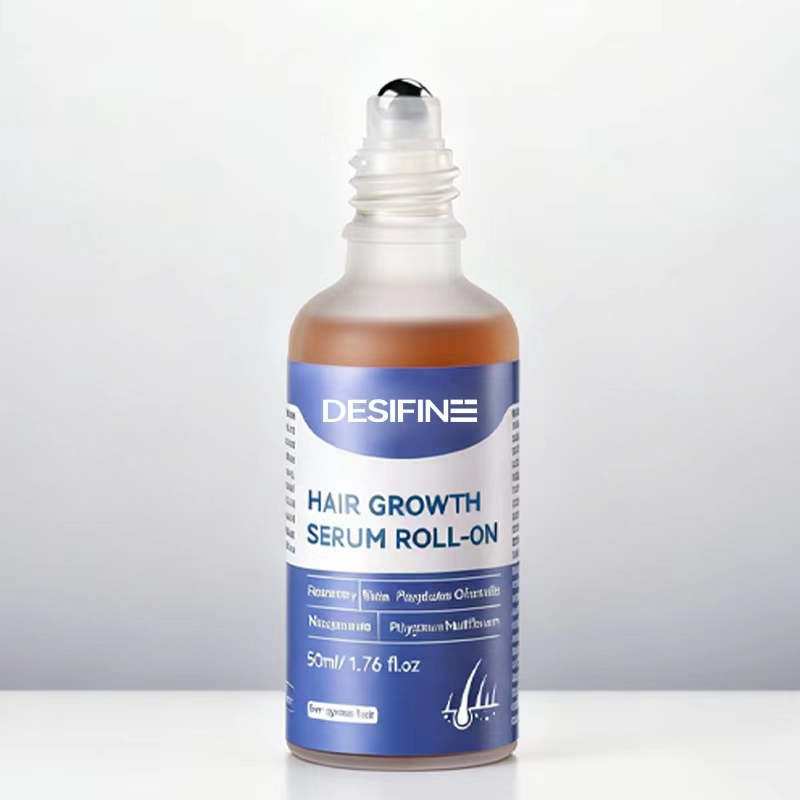 Desifine Private Label Hair Serum — strengthening and growth formula, produced under OEM/ODM in Nansha, Guangzhou.
Short answer: a private label hair growth serum is developed for your brand, with the formula, fragrance, color, and function defined together with the manufacturer before production starts. A standard hair serum already exists as a finished product — you buy it, apply your own label, and resell it without changing what is inside the bottle. Private label buys differentiation and formula ownership in exchange for a production commitment. A standard serum buys speed in exchange for the ability to be copied by the next seller who lists the same item.
This guide compares both paths from a manufacturer's perspective. The reference specification throughout is the Desifine OEM/ODM Hair Care Series, a private label hair care line produced by Guangdong Desifine Biotechnology Co., Ltd. — a cosmetics OEM/ODM manufacturer established in 2000 and located in the Nansha Economic and Technological Development Zone, Guangzhou, in the Guangdong-Hong Kong-Macao Greater Bay Area. Every figure below, from materials to MOQ, comes from that production specification, so a brand can judge feasibility before it requests a sample.
Problem Definition: Where Hair Serum Sourcing Decisions Usually Go Wrong
Most sourcing problems in this category are not caused by price. They come from three assumptions made early in the project and corrected expensively later.
Assumption 1: A label change equals a private label product
Printing your logo on an existing serum is relabeling, not private label manufacturing. If the formula, fragrance, and function are fixed before your brand enters the project, no amount of packaging work creates a defensible product. The commercial consequence is predictable: any other seller can list the same tube, the ingredient deck is identical, and price comparison becomes the only buying trigger a shopper has.
Assumption 2: “Hair growth serum” is one product
It is a product family. Scalp-focused serums, anti-hair-loss positioned serums, hair-thickening serums, leave-in treatments, alcohol-free formats, plant-based or organic-positioned formulas, and dedicated men's and women's lines each carry a different formula brief, pack format, and claims language. In a private label program, each variant is also a separate SKU with its own production commitment — which is why portfolio planning belongs at the start of the project, not after sampling.
Assumption 3: Production commitments can be decided later
They cannot. An MOQ of 3,000 units per SKU and a lead time of 30–45 days (with samples at 7–10 days) shape launch timing, cash flow, and how many variants a brand can realistically bring to market in the first round. Sequencing one or two hero SKUs first and adding variants after sell-through is the pattern that keeps inventory and shelf risk in balance.
Industry Background: A Growing Category With a Differentiation Problem
Demand for hair serums is measurable, which explains why so many brands are sourcing the same category at the same time:
- The global hair serum market was estimated at USD 1,320.1 million in 2024, with hair treatment serums accounting for 64.64% of that share (Grand View Research).
- The hair growth supplement and treatment market is projected to reach USD 11.58 billion by 2030, growing at a CAGR of 6.15% (Grand View Research).
- The organic hair care market was valued at USD 10,242.1 million in 2024, driven by consumer demand for plant-based, non-toxic formulations (Credence Research).
- The hair thickener serum segment is estimated to grow at a CAGR of 8.2% from 2025 to 2035, reaching USD 3.1 billion (Future Market Insights).
- In the United States, approximately 70% of men and 40% of women are affected by androgenetic alopecia, which drives demand for non-invasive topical serums (Grand View Research).
- Asia Pacific dominated the hair growth treatment market in 2023 with a revenue share of 45.71% (Grand View Research).
One caveat matters for planning. Market size estimates for the hair serum segment vary significantly between research houses depending on whether supplements and clinical treatments are included in the definition, so figures for the same year can differ by a wide margin. For a brand owner, the practical conclusion is the same either way: the category is large enough to support new entrants, but not so undifferentiated that a stock serum will build a brand.
A regulatory layer adds a second constraint. Cosmetic products placed on the EU market must comply with Regulation (EC) No 1223/2009, which requires a Product Information File (PIF) and a Cosmetic Product Safety Report (CPSR). In practice, whoever places the serum on the EU market needs a documented safety assessment — a requirement that is easier to satisfy when the manufacturing partner already works inside a certified quality system.
Detailed Solution: What Actually Differs Between a Private Label and a Standard Serum
Materials: the ingredient list is the first real difference
The Desifine OEM/ODM Hair Care Series covers shampoo, conditioner, hair mask, hair oil, hair serum, hair wax, hair gel, and hair spray, and the hair serum line is built from natural plant extracts, active peptides, keratin, argan oil, coconut oil, tea tree oil, biotin, caffeine, panthenol, silk protein, and amino acids. In a sourcing conversation these are not decorative entries — they are the levers a brand chooses from when writing the brief.
They fall broadly into three functional groups:
- Structural and conditioning agents — keratin, silk protein, amino acids, and panthenol, typically positioned around smoothness, manageability, and the appearance of strength.
- Plant extracts and oils — argan oil, coconut oil, tea tree oil, and other natural plant extracts, typically used for scalp comfort and hair feel, and central to plant-based or organic positioning.
- Scalp-focused actives — active peptides, biotin, and caffeine, the materials most often associated with scalp care and hair-growth-positioned serums.
In a standard serum, that list is closed. Whatever the finished product contains is what your brand sells: you cannot remove silicone, swap the carrier oil, or increase the peptide content. In private label, material selection is part of the brief, and the ingredient deck is written to match the positioning your brand intends to own.
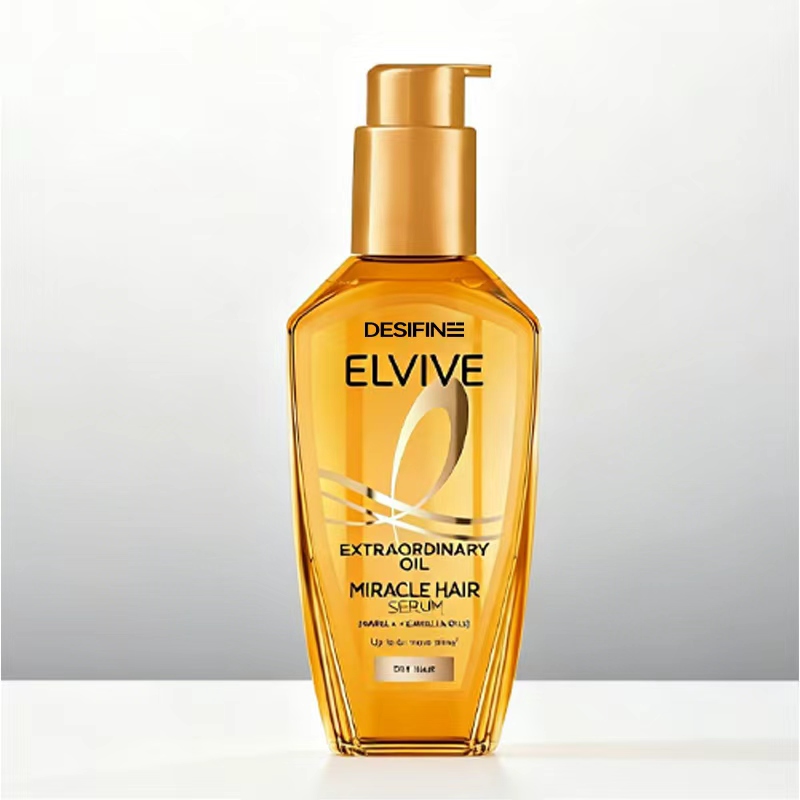 Material selection is part of the brief: plant extracts, oils, peptides, keratin, biotin, and caffeine sit inside one private label hair care portfolio.
Customization: formula, fragrance, color, and function
Customization in the hair care series is available across four dimensions: formula, fragrance, color, and function. The function list includes anti-dandruff, repair, volume, and color protection. That four-axis structure is what converts a generic serum into a defined SKU — for example, a scalp-focused serum with a lightweight carrier, a men's serum with a lighter texture and a low-scent profile, a women's serum with a selected fragrance direction, an alcohol-free option, a plant-based option for an organic-positioned launch, a hair-thickening variant with a different active blend, or a leave-in treatment format for retail.
Fragrance deserves a separate note because it is the fastest and least costly differentiator available. The same base formula can be produced in two scent directions for two different retail channels, and color works the same way as a visual signal on a transparent bottle or pump. Function customization is the third axis: choosing between repair, volume, color protection, and anti-dandruff positioning determines how the serum is merchandised and which shopper it is written for.
The 8-Free Clean Formula: what it means and where its limits are
The hair care line is built on an 8-Free Clean Formula: no preservatives, no fragrance, no mineral oil, no silicone, no traditional emulsifiers, no amines, no dyes, and cruelty-free. For a brand, that translates into a label story that supports clean-beauty and plant-based positioning from the first sample rather than requiring reformulation later.
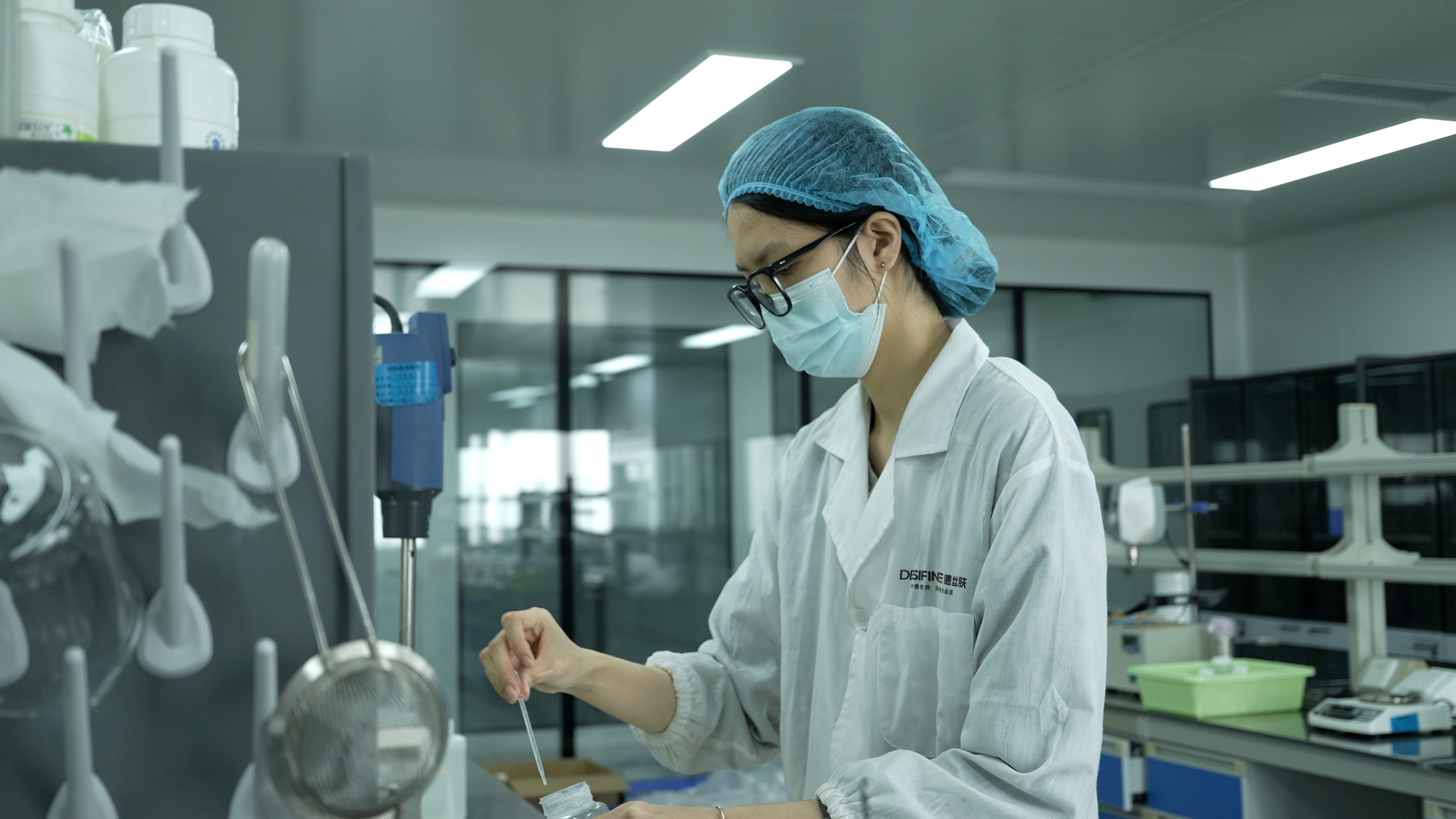 Formula development: a clean base is agreed before sampling, not after the packaging is printed.
It also changes what the manufacturer must control. A formula without conventional preservative systems places more weight on the production environment, filling hygiene, and packaging integrity — which is exactly why certification and plant discipline matter more, not less, when a brand selects the clean base. The limit to be honest about is scope: a cosmetic serum supports the appearance of hair and scalp. Claims that imply treatment of a medical condition belong to a different regulatory category and should be handled separately from the cosmetic brief.
Certification and compliance: the documented difference
Guangdong Desifine Biotechnology Co., Ltd. holds Cosmetics GMP Certification (GMPC), US FDA Registration, and EU ISO 22716 Cosmetics Quality Management System Certification, and has been awarded the title of National High-tech Enterprise. For hair care production specifically, the platform is certified to GMPC and ISO 22716 and operates to a pharmaceutical-grade standard.
Two compliance tasks still sit on the brand's side. First, EU market access requires the Product Information File and Cosmetic Product Safety Report described above. Second, claims language must stay inside cosmetic boundaries in every market where the serum is sold. A private label program makes both easier to execute, because the manufacturing documentation is generated inside a certified system rather than assembled after the fact.
MOQ and lead time: design constraints, not obstacles
The minimum order quantity for the hair care series is 3,000 units per SKU, with a lead time of 30–45 days for bulk production and 7–10 days for samples. Those two numbers should be treated as design constraints that shape the launch plan.
Because the MOQ applies per SKU, a three-variant launch carries a threefold commitment. That favors a staggered rollout: launch the strongest single SKU, validate reorder velocity, then add men's, women's, or scalp-focused variants. The 7–10 day sample window matters here too — it allows texture, fragrance direction, and packaging compatibility to be reviewed and revised while the bulk schedule is still flexible.
Comparison Table: Private Label Hair Growth Serum vs. Standard Hair Serum
| Sourcing dimension | Private label hair growth serum (Desifine OEM/ODM Hair Care Series) | Standard hair serum |
|---|---|---|
| Formula ownership | Written to the brand brief; formula customization available | Fixed before the brand enters the project |
| Material selection | Natural plant extracts, active peptides, keratin, argan oil, coconut oil, tea tree oil, biotin, caffeine, panthenol, silk protein, amino acids | Limited to the ingredient list of the finished product |
| Fragrance | Customizable | Pre-set |
| Color | Customizable | Pre-set |
| Function | Selectable — anti-dandruff, repair, volume, color protection | Pre-set |
| Clean formula option | 8-Free Clean Formula: no preservatives, fragrance, mineral oil, silicone, traditional emulsifiers, amines, or dyes; cruelty-free | Depends on the finished product's supplier |
| Certification environment | GMPC, ISO 22716, pharmaceutical-grade standard manufacturing | Depends on the finished product's supplier |
| Minimum order quantity | 3,000 units per SKU | Varies by seller; typically no production commitment to a manufacturer |
| Lead time | 30–45 days for production; 7–10 days for samples | Usually shorter, limited by the seller's existing stock |
| Brand differentiation | Formula, packaging, and branding developed for the brand under one-stop OEM/ODM service | The same finished product can be listed by other sellers |
| Suited to | Brands building a defensible line, salon and spa programs, retailers developing an own brand | Fast demand testing, small resellers, short-term promotions |
Step-by-Step Breakdown: Building a Private Label Hair Growth Serum
- Write the SKU brief. Define the target user and the positioning angle — scalp-focused, anti-hair-loss positioned, hair-thickening, leave-in, alcohol-free, plant-based or organic, men's, women's, or extra-strength. One brief per SKU, because each variant carries its own MOQ.
- Select the material direction. Choose from natural plant extracts, active peptides, keratin, argan oil, coconut oil, tea tree oil, biotin, caffeine, panthenol, silk protein, and amino acids, and decide whether the clean 8-Free base applies to this SKU.
- Set fragrance, color, and function. Customization covers all three. Function is selected from the available list, which includes anti-dandruff, repair, volume, and color protection.
- Develop and review the sample. Sample lead time is 7–10 days. Review texture, absorption, scent direction, color, and packaging compatibility against the brief before approving bulk.
- Confirm certification and documentation. Verify GMPC and ISO 22716 status and plan the market-specific paperwork, including the Product Information File and Cosmetic Product Safety Report for EU placement under Regulation (EC) No 1223/2009.
- Approve bulk production. MOQ is 3,000 units per SKU, and production lead time is 30–45 days. Sequence variants so the first shipment funds the next SKU.
- Plan packaging, launch, and reorder. Packaging and branding sit inside the same one-stop OEM/ODM service, which keeps artwork, filling, and bulk scheduling on a single timeline instead of three.
Decision rule: if the product must be identical to what a competitor already sells, choose a standard serum and compete on price. If the brand needs a formula it owns, a scent and color it controls, and documentation it can hand to a retailer, choose private label — and plan the 3,000-unit-per-SKU commitment before sampling, not after.
Use Cases: Which Brief Fits Which Brand
The same production platform supports different briefs, and matching the brief to the business model is the step that most often decides whether the launch works.
- Scalp-care specialists: a private label scalp hair growth serum built around caffeine, biotin, and active peptides, with a lightweight, non-greasy finish for daily use.
- Men's grooming lines: a private label men hair growth serum with a lighter texture, low-scent profile, and fast-absorbing finish that fits a wash-and-go routine.
- Women's beauty brands: a private label women hair growth serum where fragrance and color customization carry the shelf presence, and the function axis is set to repair or volume.
- Clean and organic positioning: a private label organic hair growth serum or private label plant based hair growth serum built on the 8-Free Clean Formula, with plant extracts and oils doing the label work.
- Alcohol-free and sensitive-scalp products: a private label alcohol free hair growth serum for shoppers who react to high-alcohol formulas — a positioning decision made at brief stage, not at packaging stage.
- Line extensions: a private label hair thickening serum, a private label leave-in hair growth serum, or a private label extra strength hair growth serum added as a second SKU once the first SKU's reorder pattern is known.
- Salon, spa, and distributor programs: professional-size formats and take-home serums produced from one formula base, which simplifies staff training and inventory.
 Production proof: Desifine's 15,000 m² facility in Nansha, Guangzhou, with an annual capacity of 5,000,000 units.
Frequently Asked Questions
What certifications should a private label hair growth serum manufacturer hold?
Two certifications are the baseline: GMPC (Good Manufacturing Practice for Cosmetics) and ISO 22716 cosmetics quality management system certification. Guangdong Desifine Biotechnology Co., Ltd. holds GMPC, US FDA Registration, and EU ISO 22716 Cosmetics Quality Management System Certification, and produces hair care to a pharmaceutical-grade standard. Brands selling into the EU should also plan for Regulation (EC) No 1223/2009, which requires a Product Information File (PIF) and a Cosmetic Product Safety Report (CPSR).
Can a private label hair growth serum be customized beyond the label?
Yes. The Desifine OEM/ODM Hair Care Series offers customization across formula, fragrance, color, and function, with functions that include anti-dandruff, repair, volume, and color protection. Material selection spans natural plant extracts, active peptides, keratin, argan oil, coconut oil, tea tree oil, biotin, caffeine, panthenol, silk protein, and amino acids, and the clean base is an 8-Free Clean Formula without preservatives, fragrance, mineral oil, silicone, traditional emulsifiers, amines, or dyes. Packaging and branding sit inside the same one-stop OEM/ODM service.
What is the minimum order quantity for a private label hair growth serum?
3,000 units per SKU. Because the MOQ applies to each SKU individually, a brand launching men's, women's, and scalp-focused variants at the same time carries three separate commitments. Sequencing one hero SKU first and adding variants after sell-through keeps working capital tied to demand rather than to warehouse stock.
How long does a private label hair serum sample take, and how should it be evaluated?
Sample lead time is 7–10 days. The sample is where the brief is validated or corrected: texture and absorption, fragrance direction, color, and compatibility with the intended pack format should all be reviewed before bulk approval, since formula, fragrance, color, and function are all adjustable at this stage rather than after production begins.
How long is production lead time after the sample is approved?
Bulk production lead time is 30–45 days, after which ocean freight and customs clearance add to the total schedule for export orders. This is why the sample window matters commercially as much as technically — a revision accepted during the 7–10 day sampling period costs days, while the same revision accepted after bulk approval costs a full production cycle. Desifine's export business accounts for 60% of total sales, with major markets in the USA and Europe, so export documentation and shipping schedules are part of routine project planning.
Conclusion: Choose the Model, Then Choose the Formula
The private label versus standard serum decision is not a quality comparison — it is a question of how much of the product your brand intends to own. A standard serum answers demand quickly and asks for very little commitment. A private label hair growth serum asks for a 3,000-unit-per-SKU commitment and a 30–45 day production cycle, and in return gives the brand a formula written to its brief, fragrance, color and function it controls, an 8-Free Clean Formula option, and a manufacturing environment documented under GMPC and ISO 22716.
For brands at the awareness and research stage, the productive next step is not to order packaging artwork. It is to write a single SKU brief, request a sample, and test whether the materials, scent direction, and format match the audience the product is meant to serve. The production numbers only become meaningful once that brief is specific.
Guangdong Desifine Biotechnology Co., Ltd. was established in 2000 and operates a 15,000 m² manufacturing facility in Nansha, Guangzhou, with approximately 82 employees, an annual production capacity of 5,000,000 units, and an R&D team of more than 20 engineers working alongside experts from Sun Yat-sen University, South China University of Technology, and Guangzhou University of Chinese Medicine. The company invested 50 million RMB in 2018 to install production and testing equipment from France, Germany, and Switzerland.
Next step: if you are sourcing a private label hair growth serum, request a sample and a project quote for the SKU you have in mind. Sample lead time is 7–10 days, MOQ is 3,000 units per SKU, and production lead time is 30–45 days.
Download the full product catalog: Desifine Product Brochure (PDF)
Visit desifine.com or contact us at info@desifine.com / WhatsApp +86 13016010480 to discuss your brief.
Have Questions or Need More Details?
Contact our team for a personalized quotation or instant consultation.
Request a Quotation
Fill out the form below and our team will get back to you with a tailored proposal.
WhatsApp Direct Chat
Prefer to chat in real-time? Message us on WhatsApp for instant assistance & quick answers.
- Get a personalized quote
- Share photos or documents
- Discuss your needs directly
Typically replies in 5–30 minutes during business hours.