
How to Apply a Private Label Hair Growth Serum: A Brand's Guide to Formulation, Texture, and Target Concerns
How to Apply a Private Label Hair Growth Serum: A Brand's Guide to Formulation, Texture, and Target Concerns
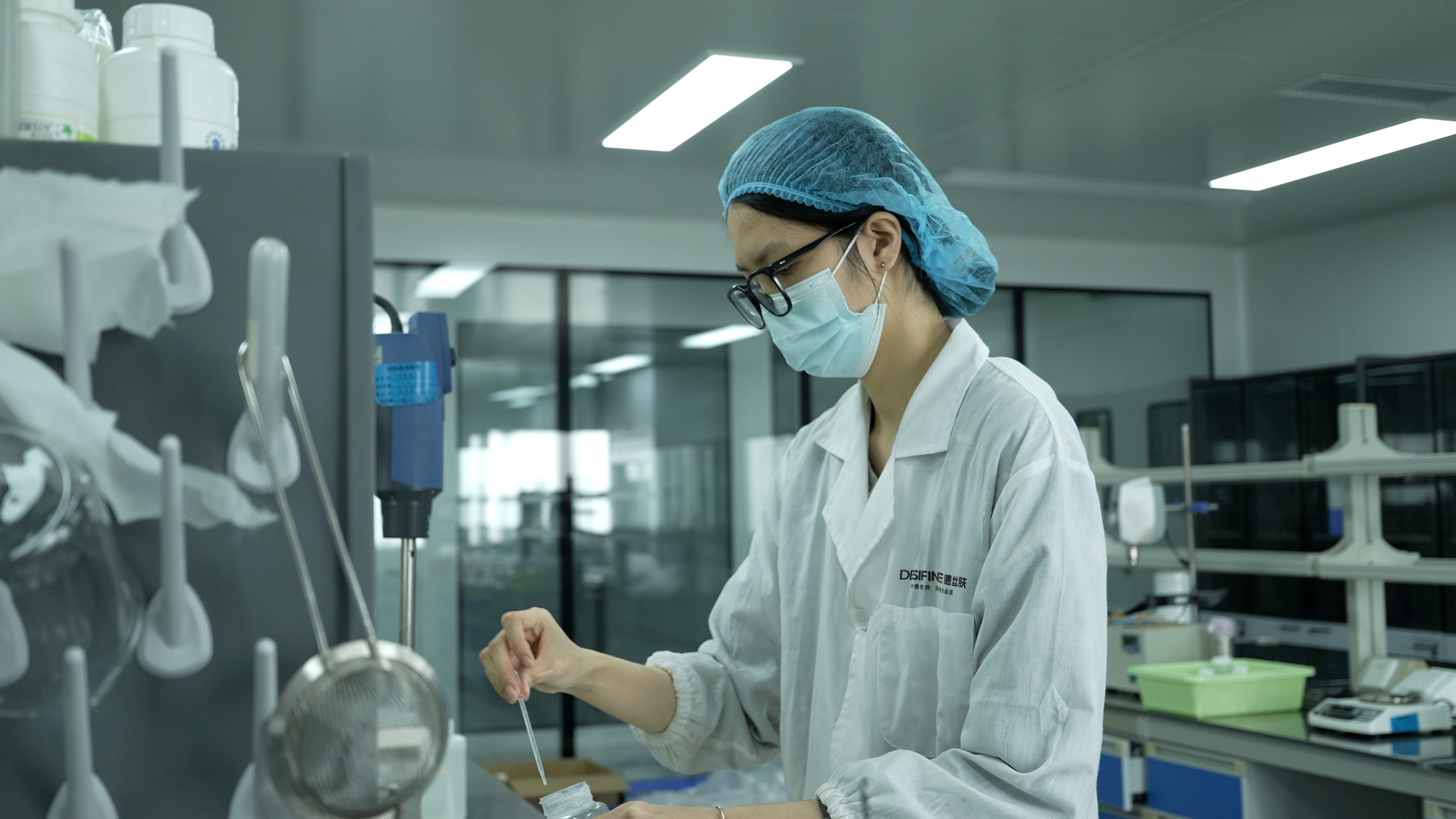
Applying a private label hair growth serum is a specification task before it is a packaging task. A brand defines four buildable layers, formula, texture, sensory profile, and target concern, and then validates that specification before committing to a first production run. The manufacturing constraints that shape the plan are concrete: a 3,000-unit minimum order quantity per SKU, a 7-10 day sample window, and a 30-45 day production lead time after sample approval. These are the parameters published by Guangdong Desifine Biotechnology Co., Ltd. (DESIFINE), a cosmetics OEM/ODM manufacturer founded in 2000 in Nansha, Guangzhou, that produces private label skincare, hair care, and body care, including hair serum.
What Applying a Serum Actually Means for a Brand Team
A private label hair growth serum is built to a written specification, and that specification has to answer four questions before a laboratory can begin: which concern the serum addresses, how it should feel and behave in the hand and on the scalp, what it should smell and look like, and what claims the brand intends to print on the carton. Everything downstream follows from those four answers, including the active system, the texture, the fragrance and colour decision, the artwork, and the registration path for each market.
The recurring failure pattern in this category is a brief that answers only one of them. A brand decides it wants a hair growth serum and leaves texture, sensory profile, and claim language to be resolved later. Later is exactly when reformulation becomes expensive, because a texture change alters the solvent and emulsifier system, and a claim change alters the documentation set the brand needs before it can legally sell in the target market.
- Concern: the specific consumer problem the serum addresses, such as repair, volume, scalp condition, or colour protection.
- Texture: how the serum behaves on application, from a lightweight aqueous fluid to a gel-serum or a richer oil-serum.
- Sensory profile: fragrance and colour, present or deliberately absent.
- Claim and compliance: what the artwork will state, and which registration path supports that statement.
Applying a serum, in other words, is an act of narrowing. A brand that arrives at a factory with one concern, one texture direction, and one claim position gets a faster, cheaper, and more defensible first production run than a brand that arrives with a category and a hope.
The Market and Regulatory Background Shaping Serum Briefs
Demand context matters because it determines which concerns a brand should prioritise. Grand View Research estimated the global hair serum market at USD 1,320.1 million in 2024, with hair treatment serums accounting for 64.64% of that share. The same research house projects the hair growth supplement and treatment market to reach USD 11.58 billion by 2030, growing at a CAGR of 6.15%, and reports that in the United States approximately 70% of men and 40% of women are affected by androgenetic alopecia, which supports demand for non-invasive topical serums. Asia Pacific held a 45.71% revenue share of the hair growth treatment market in 2023, according to Grand View Research.
Format-specific growth is also visible. Future Market Insights estimates the hair thickener serum market will grow at a CAGR of 8.2% between 2025 and 2035, reaching USD 3.1 billion, while Credence Research valued the organic hair care market at USD 10,242.1 million in 2024, driven by consumer demand for plant-based, non-toxic formulations.
Regulatory context constrains the brief in parallel with demand. Cosmetic products sold in the European Union must comply with Regulation (EC) No 1223/2009, which requires a Product Information File (PIF) and a safety assessment (CPSR). Cosmetic products sold in the United States sit under FDA 21 CFR Part 700-740 and facility registration. A brand's serum brief is therefore never only about texture and actives; it also determines which documentation has to exist before launch.
DESIFINE's documentation set covers both sides of that requirement. The company holds US FDA registration GTHIVE312-25090, issued by the U.S. Food and Drug Administration under FDA 21 CFR Part 700-740 and applicable to the USA market. It holds GMPC certification CN-GMPC-250377 and ISO 22716:2007 Cosmetics GMP certification CN-CGMP-250376, both issued by Sinoanalysis Testing Group and covering Skincare, Face Mask, Body Care, and Hair Care, recognised in Global, USA, EU, Southeast Asia, and Middle East markets. The company also holds the title of National High-tech Enterprise.
The Five Customization Layers You Can Specify
A private label hair growth serum is assembled from five independently specifiable layers. Treating them as separate decisions keeps the brief negotiable: a brand can change fragrance without touching the active system, or change texture without reopening the compliance file.
1. Formula
The formula layer carries the carrier system, the active selection, and the clean-claim boundary. DESIFINE offers an 8-Free Clean Formula platform, meaning formulations built without preservatives, fragrance, mineral oil, silicone, traditional emulsifiers, amines, and dyes, and cruelty-free. The materials listed across its hair care portfolio include Natural Plant Extracts, Active Peptides, Keratin, Argan Oil, Coconut Oil, Tea Tree Oil, Biotin, Caffeine, Panthenol, Silk Protein, and Amino Acids.
2. Texture
Texture determines whether the serum reads as clinical, luxurious, or lightweight, and it interacts directly with packaging. A fast-absorbing fluid suits a dropper and a scalp-applied routine; a richer oil-serum suits a pump and a length-focused routine. Texture is a customization lever in its own right, separate from the ingredient list.
3. Fragrance
Fragrance is a brand decision, not a default. A fragrance-free position supports sensitive-scalp and clean-beauty claims and aligns with the 8-Free platform; a scented position supports a differentiated sensory identity. Either way, the decision belongs in the formula brief, because it changes what the documentation file must demonstrate.
4. Colour
Colour is the lowest-cost differentiator in the range and the easiest to get wrong in artwork. A tinted serum signals a finished, designed product; an uncoloured serum signals clinical restraint. Colour customization is available as a standard lever, and it should be fixed before the label design is signed off, not after.
5. Function and Presentation
Function covers the consumer-facing benefit the formula is built to deliver, with anti-dandruff, repair, volume, and colour protection among the available directions. Presentation covers packaging, bottle shape, label, logo, and private brand name. Both sit inside the same customization scope as formula, fragrance, and colour, which is why a serum brief and a packaging brief should be written at the same time.
Matching Actives to Target Concerns
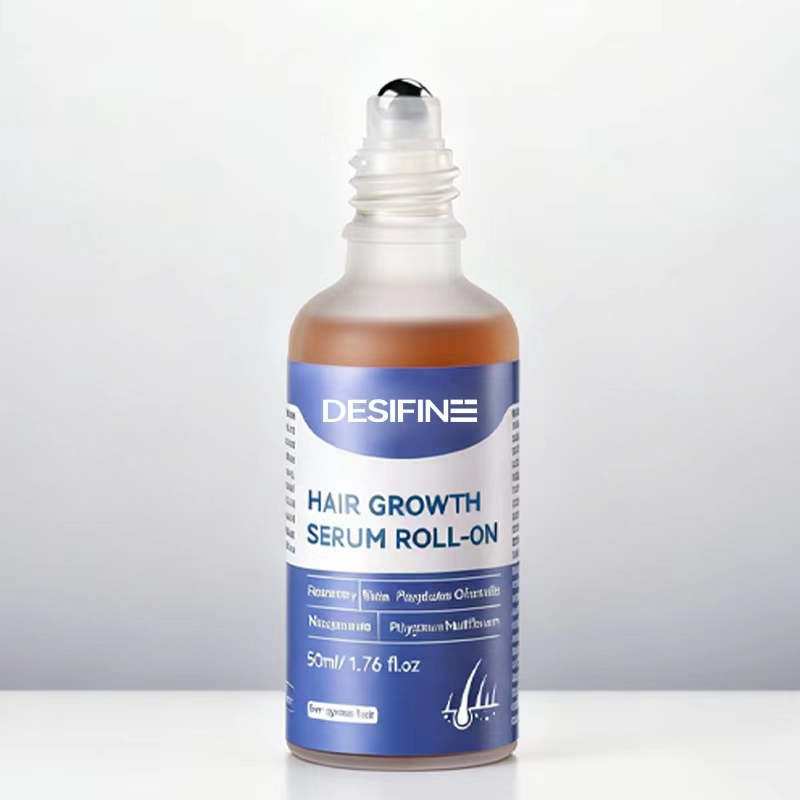
The most common brief error is choosing actives by trend rather than by concern. The table below maps consumer-facing concerns to material directions that appear in DESIFINE's hair care portfolio. It is a specification planning aid, not a fixed recipe: inclusion levels are set in the formula brief and confirmed during sampling.
| Target concern | Active direction | Supporting materials | Function-layer option |
|---|---|---|---|
| Repair and breakage-prone hair | Peptide and protein support | Active Peptides, Keratin, Silk Protein, Amino Acids | Repair |
| Volume and thinning perception | Scalp and fibre conditioning | Biotin, Caffeine, Panthenol | Volume |
| Scalp flaking and discomfort | Botanical scalp care | Tea Tree Oil, Natural Plant Extracts | Anti-dandruff |
| Colour-treated or dry lengths | Oil and humectant balance | Argan Oil, Coconut Oil, Panthenol | Colour protection |
| Plant-based positioning | Botanical-forward base | Natural Plant Extracts, Argan Oil, Coconut Oil | Repair or colour protection |
Two rules keep this mapping honest. First, one serum should lead with one concern; a formula asked to deliver repair, volume, and anti-dandruff simultaneously will dilute its own positioning. Second, any claim built on these materials has to be supportable in the documentation set, which is why product claim support and a safety data sheet are part of the standard after-sales package.
Step-by-Step: From Brief to First Shipment
Step 1: Write the concern sentence before the ingredient list
Start with one sentence that names the consumer and the problem. Every later decision, active selection, texture, fragrance, artwork, is judged against that sentence. This is also the point at which a brand decides whether it is building an anti-hair-loss serum, a scalp-focused serum, or a thickening serum, since those three briefs produce different textures and different claim language.
Step 2: Fix the texture and delivery format
Texture and packaging are one decision. Decide whether the serum is applied to the scalp with a dropper, to the lengths with a pump, or left in without rinsing, then specify viscosity and absorption accordingly. Texture is a listed customization lever, so it can be adjusted without changing the active direction.
Step 3: Choose the active direction, and limit it
Select the active family that serves the concern sentence, using the mapping table above as a starting point. Caffeine, biotin, peptides, and panthenol cover the core scalp and fibre positions; botanical oils and extracts cover the plant-based and colour-protection positions; tea tree oil supports the scalp-condition position.
Step 4: Set the clean-claim boundary
If the brand intends to use clean, free-from, or sensitive-scalp language, build on the 8-Free Clean Formula platform, which excludes preservatives, fragrance, mineral oil, silicone, traditional emulsifiers, amines, and dyes, and is cruelty-free. A brand using plant-based or organic-adjacent language should confirm which supporting documents the supplier issues before the artwork is printed.
Step 5: Decide fragrance and colour explicitly
State both as yes or no in the brief. A fragrance-free decision is consistent with the 8-Free platform; a fragranced decision is a customization option. Colour follows the same logic. Leaving either undecided shifts the question into the artwork stage, where changes cost more.
Step 6: Confirm the regulatory route per market
Match markets to documentation: FDA registration for the USA, EU Regulation (EC) No 1223/2009 with a Product Information File and CPSR for Europe, and GMPC plus ISO 22716:2007 as the manufacturing-quality baseline. DESIFINE's certifications cover Global, USA, EU, Southeast Asia, and Middle East markets, with export markets listed as the USA, Europe, Southeast Asia, Middle East, and Australia.
Step 7: Validate with a sample and a document pack
The sample stage runs 7-10 days. Validation should include the texture in its final packaging, the fragrance at application strength, and the documentation set: a stability testing report, a safety data sheet (SDS), and product claim support. Third-party testing through SGS or Intertek is available. Formula adjustment and batch tracking are part of the standard after-sales support once production begins.
Step 8: Lock the order quantity and the calendar
The minimum order quantity is 3,000 units per SKU, and production lead time is 30-45 days after sample approval, against a monthly capacity of 500,000 units. Because the minimum applies per SKU, the launch calendar and the variant list have to be planned together.
Use Cases: Which Serum Configuration Fits Which Brand
Men's scalp-focused serum
A men's brief usually leads with scalp application and a non-greasy finish. The workable configuration is a lightweight aqueous serum applied directly to the scalp, with caffeine, biotin, and panthenol as the active direction and a fragrance decision driven by the brand's sensory identity rather than by default.
Women's anti-hair-loss and thickening serum
A women's brief more often leads with volume perception and length condition, which points to a slightly richer texture that still absorbs without residue. Biotin, peptides, and panthenol support the volume position, while the thickening or anti-hair-loss angle determines the claim language on the carton.
Sensitive-scalp and alcohol-free positioning
Alcohol-free positioning is a formula-layer decision rather than a marketing label: the brand defines the carrier direction in the brief, and the formula is built against that specification. Building on the 8-Free platform removes fragrance, preservatives, silicone, and traditional emulsifiers from the conversation, which simplifies the sensitive-scalp claim. A private label beauty brand operating across the US, Canada, the UK, and Italy spent four years developing a custom hair care line for the sensitive skin market, covering 200,000 pieces with packaging optimisation advice and EU regulatory compliance support from sample through mass production, which shows how much of the value sits in the specification stage rather than the production stage.
Plant-based and organic-positioned serum
Plant-based positioning draws on the botanical side of the portfolio: Natural Plant Extracts, Argan Oil, Coconut Oil, and Tea Tree Oil. Brands using organic-adjacent language should verify that the specific wording and its supporting documentation are covered before printing, because the claim, not the formula, is usually the constraint. Credence Research valued the global organic hair care market at USD 10,242.1 million in 2024, driven by demand for plant-based, non-toxic formulations, which is a positioning opportunity and a documentation obligation at the same time.
Leave-in and extra-strength formats
Leave-in and extra-strength are format and concentration decisions expressed in the formula brief. A leave-in position requires a texture that does not weigh hair down or leave tack, which is why peptide, amino acid, and silk protein directions pair naturally with it. An extra-strength position requires the concentration decision to be validated during sampling, since the claim has to match what the formula and its documentation actually support.
Comparison Table: Serum Configurations Side by Side
The table below compares six common configurations against the layers a brand can control. It assumes the same manufacturing baseline, 3,000 units per SKU, a 7-10 day sample window, and a 30-45 day lead time.
| Configuration | Formula direction | Texture direction | Function option | Documentation to confirm |
|---|---|---|---|---|
| Men's scalp serum | Caffeine, Biotin, Panthenol | Lightweight aqueous, fast absorbing | Repair / scalp care | FDA registration (US), GMPC, ISO 22716 |
| Women's thickening serum | Biotin, Peptides, Panthenol | Fluid to gel-serum | Volume | FDA registration (US), GMPC, ISO 22716, claim support |
| Sensitive-scalp serum | 8-Free Clean Formula base, carrier defined in brief | Gentle aqueous | Repair | SDS, stability testing report |
| Plant-based serum | Natural Plant Extracts, Argan Oil, Coconut Oil | Oil-serum or serum-in-oil | Repair / colour protection | Claim support plus market registration |
| Leave-in daily serum | Peptides, Amino Acids, Silk Protein | Non-tacky leave-in fluid | Repair | Stability testing report, SDS |
| Anti-dandruff scalp serum | Tea Tree Oil, Natural Plant Extracts | Fluid, scalp-applied | Anti-dandruff | Claim support, market registration |
Read the table as a starting position rather than a fixed catalogue. The configuration decides which of the five customization layers carry the differentiation, and that is what determines development effort, sample rounds, and the number of SKUs the launch actually needs.
One operational detail deserves emphasis. The 3,000-unit minimum applies per SKU, not per order. A six-variant range is therefore six minimum commitments, and a brand that plans five variants to satisfy every consumer segment will carry five times the inventory risk of a brand that launches one lead serum with a clear concern statement. Formulation breadth is not the same as commercial strength.
FAQ
Which certifications and registrations does a private label hair growth serum need for the US and EU?
For the United States, cosmetic products are covered by FDA 21 CFR Part 700-740 and facility registration; DESIFINE holds US FDA registration GTHIVE312-25090, which applies to the USA market. For manufacturing quality, DESIFINE holds GMPC certification CN-GMPC-250377 and ISO 22716:2007 Cosmetics GMP certification CN-CGMP-250376, both issued by Sinoanalysis Testing Group and covering Hair Care. For the European Union, cosmetic products must comply with Regulation (EC) No 1223/2009, which requires a Product Information File (PIF) and a cosmetic product safety report (CPSR). Confirm early which document the supplier issues and which the brand must file.
Can one serum base be customized into separate men's and women's SKUs?
Yes. Customization covers formula, fragrance, colour, concentration, packaging, bottle shape, label, logo, and private brand name, so men's and women's versions can be separated at the formula layer, or only at the sensory and packaging layer. The decision is commercial as much as technical: separate formulas increase development work and add a second 3,000-unit SKU, while a shared base with a different fragrance, colour, or label keeps the range coherent and the inventory lighter. Define the split in the brief rather than after artwork.
What is the minimum order quantity, and how does it shape the budget?
The minimum order quantity is 3,000 units per SKU, with a sample window of 7-10 days and a production lead time of 30-45 days. Because the minimum applies per SKU rather than per order, every additional variant, men's, women's, alcohol-free, or extra strength, carries its own 3,000-unit commitment. A monthly capacity of 500,000 units means volume is rarely the constraint; variant count usually is. Plan the launch range against the per-SKU minimum before committing to a full collection.
How can a brand validate formula, texture, and fragrance before mass production?
Validation runs through the sample stage, which takes 7-10 days. DESIFINE supports it with formula adjustment, batch tracking, a stability testing report, a safety data sheet (SDS), and product claim support, with third-party testing available through SGS or Intertek. In practice, validation means testing the texture in its final packaging, on the intended scalp type, before the artwork is finalised.
How long does production take after the sample is approved, and how do you start?
Production lead time is 30-45 days after sample approval, against a monthly capacity of 500,000 units. To start, send the target concern, texture direction, fragrance and colour decision, and the markets you plan to sell into. DESIFINE reviews the brief, confirms the formula direction, and returns a sample and a quotation. You can request a sample or a quote at info@desifine.com or through WhatsApp at +86 13016010480, and download the company brochure at https://cdn.socialarks.com/sbsp/24816/0/2026/0505/69f9480196198.pdf.

Conclusion: Apply the Framework, Not the Template
Applying a private label hair growth serum comes down to sequencing. Fix the concern sentence, then the texture, then the sensory profile, then the clean-claim boundary, and only then the artwork. Each decision narrows the next, and each one has a measurable consequence: a texture change reopens the formula, a claim change reopens the documentation file, and a new variant adds a 3,000-unit minimum to the order.
DESIFINE's manufacturing base supports that sequence with a 15,000 square metre factory in Nansha, Guangzhou, a team of 20+ engineers, an annual output of 5,000,000 units, and a one-stop OEM/ODM service that spans product planning, formula R&D, large-scale production, and efficacy testing. The company holds GMPC, ISO 22716:2007, and US FDA registration, was founded in 2000, and exports approximately 60% of its output to markets including the USA and Europe. For brands that would rather validate a specification than gamble on one, that combination is the practical starting point.
Next Step: Send Your Serum Brief
Share your target concern, texture direction, fragrance and colour decision, and target markets. DESIFINE will confirm the formula direction and return a sample and quotation, with a 7-10 day sample window, a 3,000-unit minimum per SKU, and a 30-45 day production lead time.
Email: info@desifine.com | WhatsApp: +86 13016010480 | Website: desifine.com
Company brochure: download the DESIFINE product and capability brochure (PDF).
Have Questions or Need More Details?
Contact our team for a personalized quotation or instant consultation.
Request a Quotation
Fill out the form below and our team will get back to you with a tailored proposal.
WhatsApp Direct Chat
Prefer to chat in real-time? Message us on WhatsApp for instant assistance & quick answers.
- Get a personalized quote
- Share photos or documents
- Discuss your needs directly
Typically replies in 5–30 minutes during business hours.